


27.11.2023
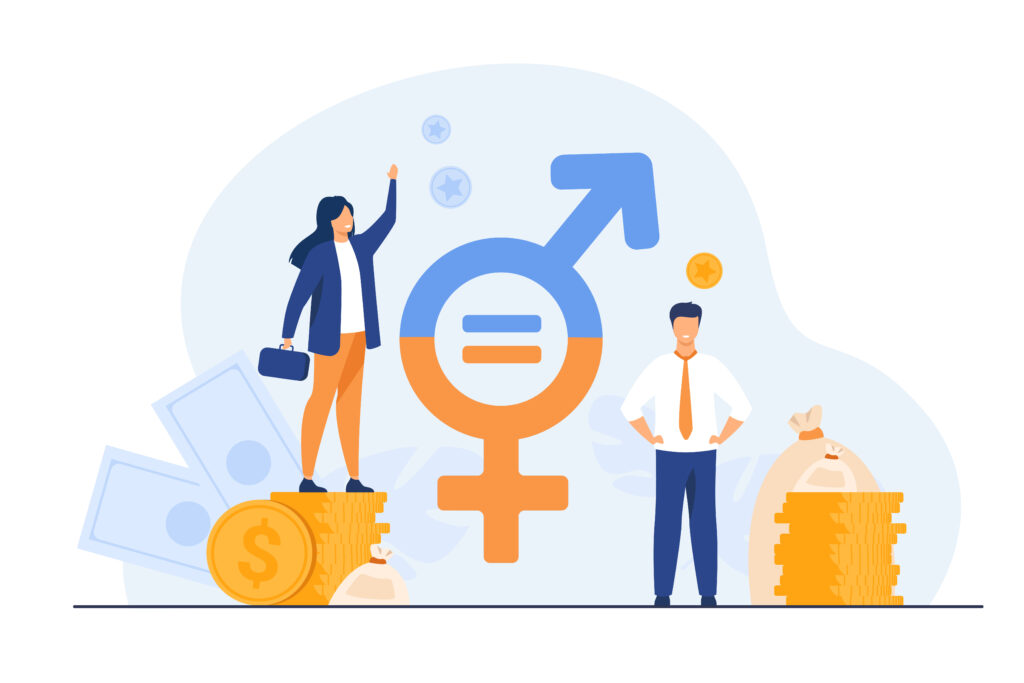
Women’s economic empowerment is not just a matter of social justice but also a critical aspect of economic growth and development worldwide. Women’s economic empowerment and closing gender gaps in the world of work are essential for achieving the 2030 UN Agenda for Sustainable Development.
Women’s participation in the workforce contributes to economic growth. Empowering women economically not only enhances productivity but also leads to increased economic diversification and income equality, along with other favorable developmental outcomes. It is estimated that if women’s employment in OECD (Organisation for Economic Co-operation and Development) countries are elevated to match Sweden, this would potentially lead to an increase in the GDP of these countries by more than 6 trillion USD. By contrast, greater gender disparities put a heavy cost on the economy.
A recent study focused on gender equality in the EU has shown that gender equality positively impacts GDP per capita. The study suggests that improving gender equality by 2050 would lead to an increase in GDP per capita by 6.1% to 9.6% in the EU, i.e., it would lead to a grow from €1.95 to €3.15 trillion.
Although women’s labor—both inside and outside home— is crucial for the well-being of families and societies alike, it is hugely undervalued. A humanitarian organization ActionAid calculated the economic value of this undervalued work by addressing gender inequities in developing countries. ActionAid’s findings show that “women in developing countries could be 9 trillion USD better off if their pay and access to paid work were equal to that of men.” This huge number represents the yet untapped potential of women and the urgent need to improve the lives of women and of their families. Moreover, lack of equality and denying women’s rights has consequences for business and the economy alike. For instance, in 2012, International Labour Organisation (ILO) approximated that by decreasing the gap in employment between men and women and ensuring that women have a possibility to work (inside or outside the home) can help to generate additional 1.6 trillion USD globally.
In order to ensure women’s economic empowerment, it is paramount to guarantee access to education. In other words, increasing women’s and girls’ access to education and re-skilling, when needed, provides women with income-generation opportunities and facilitates participation in the formal labor market, thus increasing economic growth. It is estimated that in OECD countries, about 50% of economic growth over the past 50 years is attributed to increased educational attainment. Yet, significant gains in education alone often fail to translate into improved labor market outcomes for women, which is unfortunate.
Greater gender equality and women’s empowerment are also good for business. Companies attain significant benefits when they enhance employment and leadership prospects for women, leading to improved organizational effectiveness and growth. Research suggests that companies featuring three or more women in senior management roles consistently achieve higher scores across all aspects of organizational performance. Another study also found that having women on organizational boards made shareholders feel more positive about the company, increased board sensitive to various issues of consequence for women employees, and made women employees feel more positive about the company’s commitment to diversity.
Unfortunately, there still are many challenges that need to be addressed in order to ensure greater gender equality. For instance, women still bear a disproportionate burden of unpaid care and domestic labor, which negatively affects their ability to participate in the labor market. This invisible work must be acknowledged and supported as such care and reproduction work are invisible pillars of the world economy.
Women migrant workers find themselves in an even more dire situation. Approximately half of all 258 million migrant workers worldwide are women. Africa and Asia are the only regions where men outnumber women as migrant workers because women are more engaged in doing unpaid care work. Women migrants are responsible for approximately $300 billion USD in remittances worldwide (as of 2016). Moreover, given that women are often more connected to families that stay in the countries of origin, women remit more often and more regularly. In other words, women migrants are increasingly supporting the economies of their home countries through regular remittances.
Women are more likely to be affected by climate change and environmental degradation. Unfortunately, this only adds to their caregiving responsibilities as it also pushes them to find various strategies on how to cope with climate-related shocks and the subsequent health effects. As land, forest, and water resources are increasingly compromised, privatized, or exploited for commercial investment, local communities and indigenous peoples, particularly women reliant on these resources for their livelihoods, are marginalized and displaced. Globally, women are 14 times more likely than men to lose their lives during a disaster.
It is important to include women into decision-making processes on the environment on all levels as this is beneficial for the economy, the environment, and local communities alike. Research shows that whereas men working with climate change are more likely to favor technical solutions, women, by contrast, are more risk-aware, willing to adapt, and better understand the inter-generational consequences of global climate change.
Both developed and developing countries have labor laws that negatively affect women. It is estimated that 2.7 billion women worldwide face legal restrictions that limit their ability to have the same jobs as men. In addition, harassment and violence in the workplace affect all women regardless of their age, income, or country of origin or residence. Not preventing harassment and violence in the workplace has serious economic costs. It is estimated that both human and social costs of harassment and violence to the global economy are approximately 12 trillion USD per year.
Overall, women’s economic empowerment is an important endeavour that benefits society at large and has positive implications for the global economy. Achieving sustainable development goals requires collective efforts to address legal, social, and economic challenges and fostering an inclusive and equitable world for all. Through continued commitment and innovative strategies, we can unlock the full potential of women’s economic empowerment and pave the way for a more prosperous and sustainable future.
Join our mailing list